Poetry About Japanese Internment Camps

Poetry about Japanese Internment Camps begins with a concrete image: a numbered tag is tied to the suitcase where a family's address once mattered.

These original poems explore wartime incarceration, Executive Order 9066, uprooting, barracks, resistance, redress, memory, and Japanese American lives through precise scenes, human feeling, and thoughtful language.

Featured Poems

The Numbered Tag

A scene-led poem about Japanese Internment Camps.

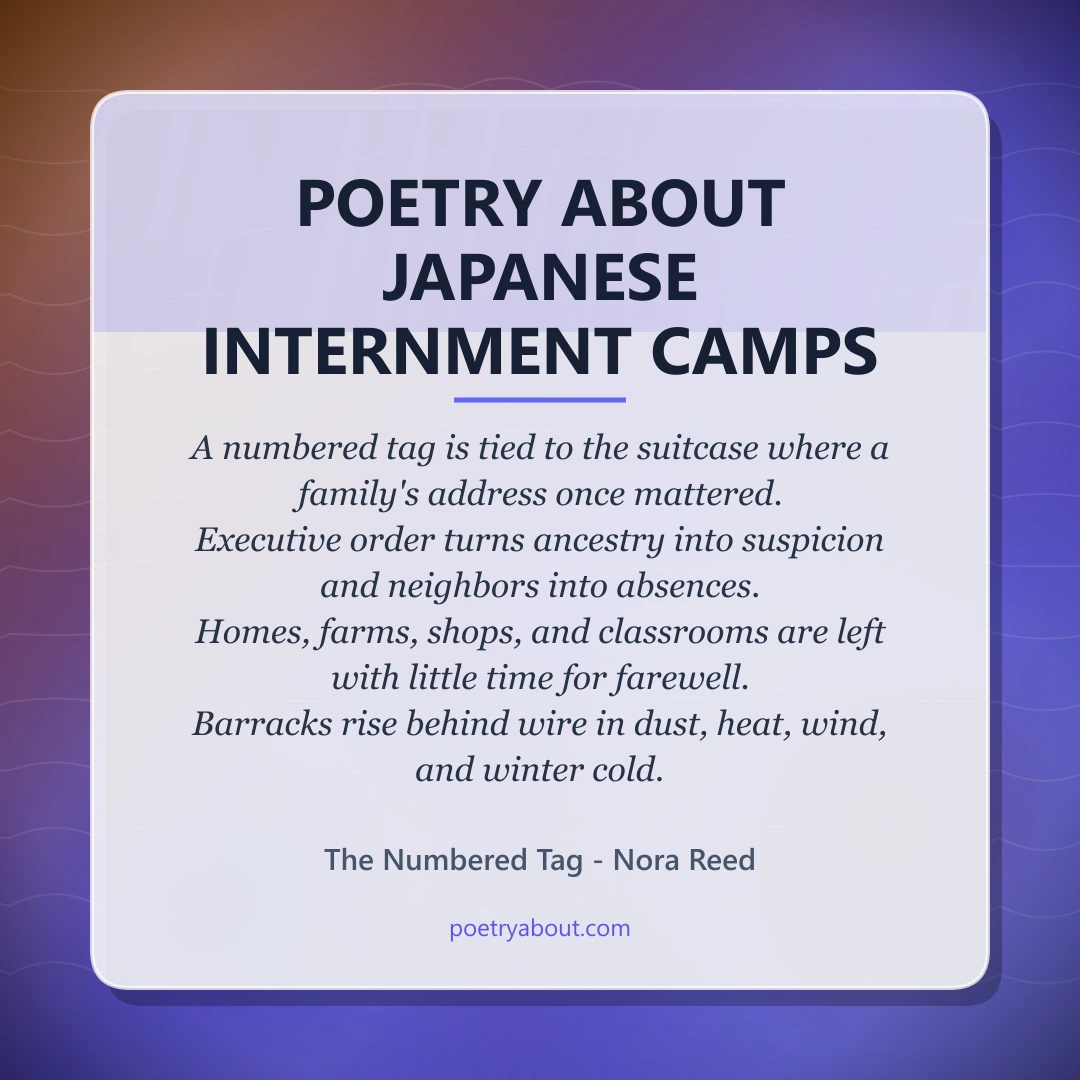
A numbered tag is tied to the suitcase where a family's address once mattered. Executive order turns ancestry into suspicion and neighbors into absences. Homes, farms, shops, and classrooms are left with little time for farewell. Barracks rise behind wire in dust, heat, wind, and winter cold.

- Nora Reed

Barracks in the Dust

A second original poem approaching Japanese Internment Camps from another angle.

Homes, farms, shops, and classrooms are left with little time for farewell. Some resist the questions designed to measure loyalty after betrayal. Military service does not make the incarceration less unjust. Decades pass before apology and redress enter federal law. Memory keeps asking how fear was allowed to call itself security. A democracy must study the rights it abandoned in its own name.

- Theo Linden

Redress

A reflective poem about what Japanese Internment Camps asks us to notice.

A numbered tag is tied to the suitcase where a family's address once mattered. Children recite the pledge beneath a flag beyond the guard tower. Families make gardens, newspapers, art, protest, and privacy where they can. Decades pass before apology and redress enter federal law. The paper tag survives in an archive, its string still looped. A democracy must study the rights it abandoned in its own name.

- Elian Moss

Micro Verses

A numbered tag is tied to the suitcase where a family's address once mattered. The paper tag survives in an archive, its string still looped.

- Nora Reed

Some resist the questions designed to measure loyalty after betrayal. Memory keeps asking how fear was allowed to call itself security.

- Theo Linden

Children recite the pledge beneath a flag beyond the guard tower. A democracy must study the rights it abandoned in its own name.

- Elian Moss

Deeper Explorations

The Visible Detail

Poems that locate Japanese Internment Camps in exact, memorable scenes.

Close Study

Executive order turns ancestry into suspicion and neighbors into absences. Barracks rise behind wire in dust, heat, wind, and winter cold. Some resist the questions designed to measure loyalty after betrayal. Decades pass before apology and redress enter federal law.

- Theo Linden

The Larger Meaning

Poems about the wider emotional, historical, or social current around Japanese Internment Camps.

What Remains

Families make gardens, newspapers, art, protest, and privacy where they can. Military service does not make the incarceration less unjust. Memory keeps asking how fear was allowed to call itself security. A democracy must study the rights it abandoned in its own name.

- Elian Moss

Explore Related Poetry